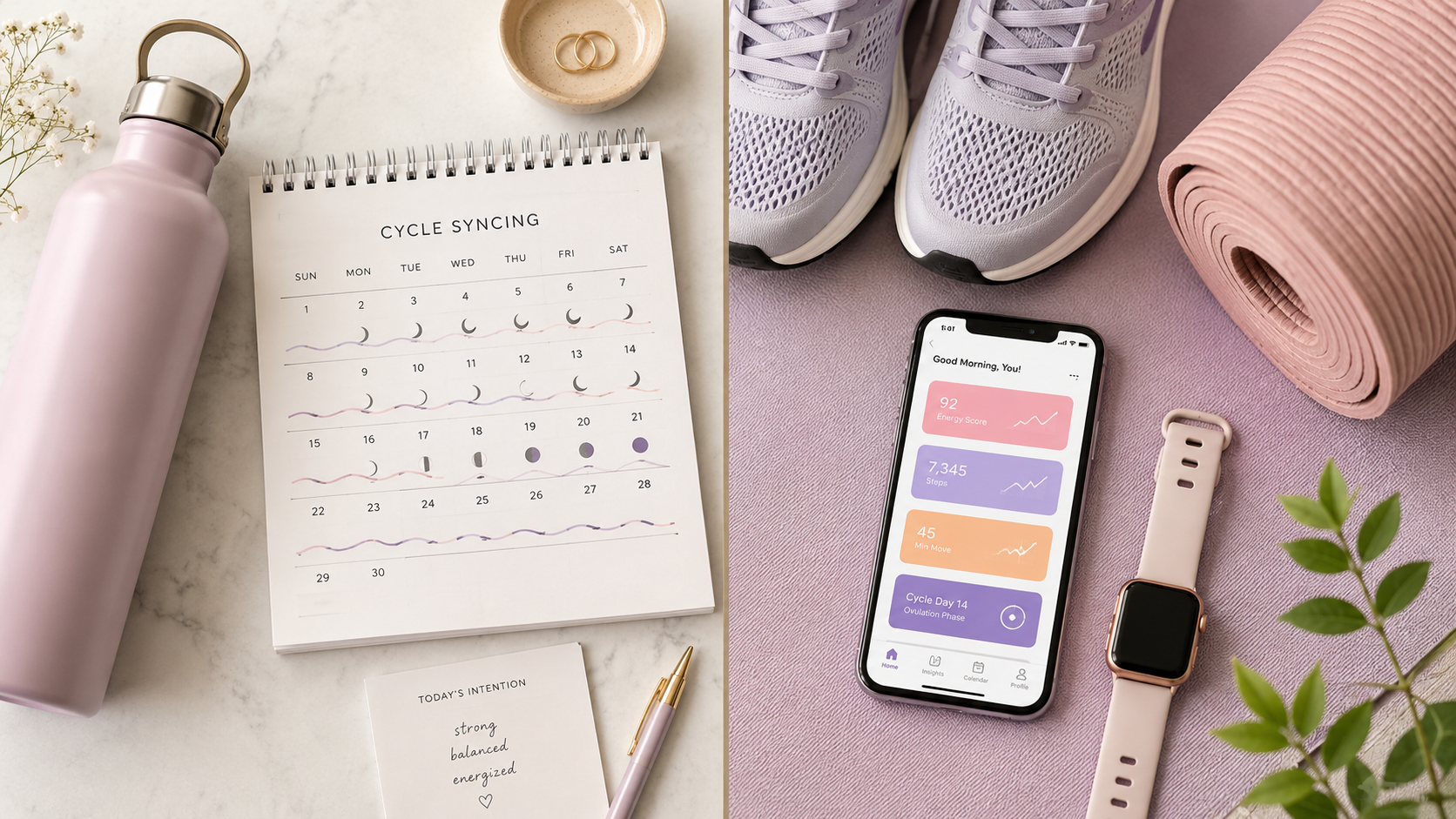
Have you ever noticed that on some days you feel like you could run a marathon, while on others, simply getting out of bed feels like a monumental task? For the longest time, fitness advice has pushed a one-size-fits-all approach that demands high-intensity effort every single day. But your body doesn’t operate on a flatline, and forcing it to do so can leave you feeling chronically exhausted.
Learning how to practice cycle syncing is the key to unlocking a deeper connection with your body’s natural rhythms. By tailoring your exercise routine to the four distinct phases of your menstrual cycle, you can stop fighting against your physiology. Instead, you learn to ride the natural waves of your hormones to optimize your energy and well-being.
Key Takeaways
- Listen to Your Fluctuations: Your strength, endurance, and recovery needs change naturally throughout the month.
- Four Phases, Four Styles: Divide your month into menstrual, follicular, ovulatory, and luteal phases for targeted movement.
- Reduce Burnout: Matching your workout intensity to your hormonal shifts lowers physical stress and prevents fatigue.
- Hormonal Harmony: Proper rest during lower-energy phases supports balanced cortisol and smoother periods.
Why This Matters
For decades, standard fitness routines were designed around the male 24-hour hormonal cycle. Women operate on an infradian rhythm, a monthly cycle that heavily influences metabolism, mood, and stress tolerance. Designing a routine around a beginner’s guide to cycle syncing allows you to respect these internal shifts rather than ignoring them.
When you force high-intensity interval training (HIIT) during a phase when your body is craving rest, you elevate your stress hormones. Over time, this can lead to irregular cycles, mood swings, and stubborn fatigue. Embracing cyclical movement fosters emotional resilience, respects your nervous system, and turns exercise into a form of self-care.
💙 Wellness Insight
Cycle syncing isn’t about restriction or rules; it is an invitation to practice radical self-compassion. When you shift your mindset from “burning calories” to “nourishing your current state,” exercise becomes an act of lifetime wellness.
Understanding the Science
Your menstrual cycle is governed by the rise and fall of two main hormones: estrogen and progesterone. During the first half of your cycle, estrogen rises, boosting your mood, brain function, and physical stamina. This is the time when your body is naturally primed for building muscle and recovering quickly from intense efforts.
In the second half, progesterone takes the lead, which can increase your resting heart rate and make you feel warmer. Higher progesterone levels often trigger the body’s stress response more easily, meaning intense workouts can feel much harder. Understanding this brain-body connection helps you realize that a drop in performance isn’t a lack of discipline—it is pure biology.

Practical Ways to Apply It
The Menstrual Phase
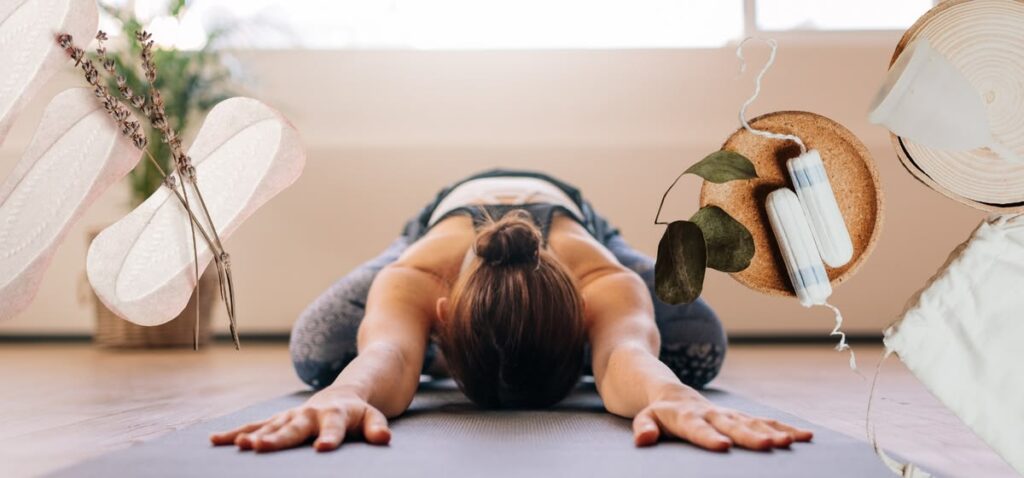
Estrogen and progesterone are at their lowest points, and your body is redirecting energy inward. Focus on restorative yoga, gentle stretching, or slow walks to support pelvic blood flow.
The Follicular Phase
As estrogen begins its steady climb, your physical energy and mental optimism bounce back. This is the perfect time to try new things, start a running program, or enjoy light weight training.
The Ovulatory Phase
Estrogen peaks, bringing your energy, confidence, and strength to their highest levels of the month. Capitalize on this window with high-intensity workouts, heavy strength lifting, or power yoga.
The Luteal Phase
Estrogen dips while progesterone rises, gradually winding down your physical stamina. Shift your focus toward pilates, steady-state cardio, and strength training with lighter weights and longer rest periods.
🌿 Try This Today
Open a journaling app or a notebook and log where you are in your cycle today. Take three deep diaphragmatic breaths, check in with your physical energy, and choose one movement that matches how you feel right now.
Common Mistakes
The most common trap beginners fall into is treating cycle syncing like an aggressive, rigid rulebook. If you wake up during your ovulatory phase feeling exhausted, you should still rest, regardless of what the calendar says. True wellness comes from combining scientific knowledge with your intuitive inner voice.
“Your body is not a machine designed to deliver identical outputs every day. It is an ecosystem that thrives on the beautiful balance of changing seasons.” — Unknown

Can I still do high-intensity workouts on my period if I feel good?
Yes, absolutely. While this beginner’s guide to cycle syncing provides a general blueprint, your personal experience is the ultimate authority. If your energy is high on day two of your cycle, feel free to exercise, but pay extra attention to your recovery.
How long does it take to see results from cycle syncing?
Most women begin to notice improvements in their energy levels, mood stability, and PMS symptoms within two to three full cycles. Consistency and patience are key when encouraging hormonal balance.
What if my menstrual cycle is irregular?
If your cycle varies, you can track physical symptoms like cervical mucus, basal body temperature, or energy shifts rather than calendar dates. Syncing your movements to your actual energy levels is highly beneficial even without a predictable schedule.
Final Thoughts
Learning to workout with your period is an empowering journey that transforms your relationship with fitness. Instead of fighting a constant uphill battle against fatigue, you allow your hormones to work for you. Be patient with yourself as you navigate these internal shifts and explore this beginner’s guide to cycle syncing. By honoring your natural rhythm, you protect your mental health, honor your nervous system, and build a sustainable routine that lasts a lifetime.