Have you ever found yourself staring at your screen at 8:00 PM, sitting in the exact same spot where you ate breakfast, wondering where the day went? In a world where our living rooms double as offices and our devices keep us permanently tethered to target lines, the boundaries don’t just blur—they completely evaporate. For a long time, my daily routine felt less like a flexible luxury and more like a beautifully decorated pressure cooker. The quiet of a modern lifestyle doesn’t always bring peace; often, it just turns up the volume on your inner critic. I found myself trapped in an endless cycle of overworking, second-guessing my value, and measuring my self-worth solely by the number of checked boxes on my to-do list.
I didn’t need another time-management app or a better morning routine. I needed a structural overhaul of how I spoke to myself. The turning point came when I stopped looking for productivity hacks and started looking for perspective. These three life-changing books completely rewrote my inner narrative, and they might just do the same for you.
The Antidote to the “Do It All” Trap
1. Essentialism: The Disciplined Pursuit of Less by Greg McKeown
When you operate in a fast-paced environment, the temptation to say “yes” to every project, email, and virtual coffee chat is overwhelming. You feel vulnerable, so you overcompensate by staying constantly available. I used to think that being successful meant being a master juggler. Essentialism violently shattered that illusion. McKeown introduces a deceptively simple philosophy: less but better. He argues that if you don’t prioritize your life, someone else will.
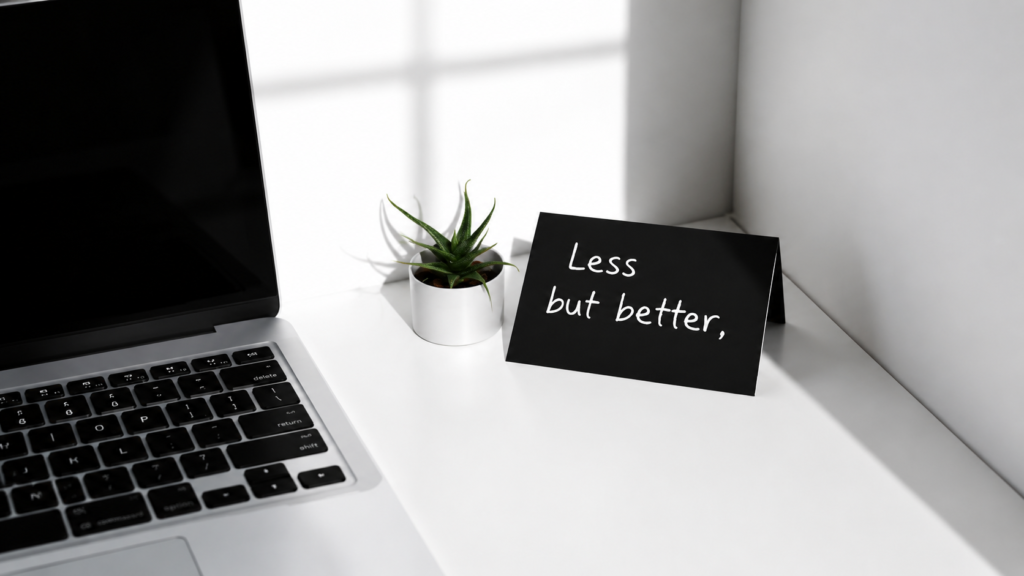
Reading this book felt like a permission slip to stop stretching myself a mile wide and an inch deep. I realized that my inner narrative was operating on a scarcity mindset—the belief that I had to do everything to be enough.
“Essentialism is not about how to get more things done; it’s about how to get the right things done. It is about making the wisest possible investment of your time and energy.” — Greg McKeown
To move this from theory into my actual daily life, I started implementing two specific habits that completely changed my focus:
The 90% Rule for Decisions
When evaluating any new opportunity—be it a fresh project, a collaboration, or a social commitment—give it a honest score from 0 to 100.
Why it works: It ruthlessly eliminates the agonizing middle ground of “maybe” and saves your precious mental energy for what truly matters.
The Daily Rule of One
Ditch the terrifying 20-item to-do list. Instead, choose exactly one single execution goal for your day.
Why it works: It creates absolute clarity and momentum. Anything else you accomplish after that single goal is just extra credit.
Confronting the Critic in the Quiet Moments
2. The Mountain Is You: Transforming Self-Sabotage Into Self-Mastery by Brianna Wiest
Spending an unprecedented amount of time alone with your thoughts can be daunting. Without the natural distractions of a bustling corporate office or an active social calendar, your deepest insecurities have a way of crawling out of the woodwork. For me, this manifested as chronic procrastination disguised as “research” and a paralyzing perfectionism that stopped me from releasing new creative projects.
The Mountain Is You helped me recognize that my self-sabotaging behaviors weren’t character flaws; they were subconscious coping mechanisms. Wiest explains that the mountain isn’t an external obstacle—it is simply the accumulated weight of your own unresolved fears.
Shifting My Perspective
Inspired by “The Mountain Is You” by Brianna Wiest
Shifting this narrative required shifting my actions. Now, whenever I find myself endlessly scrolling instead of working on a passion project, I don’t scold myself. Instead, I pause and ask: “What uncomfortable emotion am I trying to avoid right now?” Identifying the fear immediately strips away its power over your afternoon.
Breaking Up with the Myth of “Getting It All Done”
3. Four Thousand Weeks: Time Management for Mortals by Oliver Burkeman
If you are a self-improvement junkie like me, you’ve probably fallen into the trap of believing that the perfect organizational system exists. We tell ourselves, “Once I get through this busy season, I’ll finally be on top of things.”
Oliver Burkeman’s Four Thousand Weeks is the ultimate reality check. The title refers to the average lifespan of a human being. His core thesis is beautifully liberating: You will never get it all done. And that is completely okay.
This book completely dismantled the toxic productivity narrative that thrives in our modern hustle culture. I stopped trying to optimize every spare minute of my life. Burkeman taught me the art of strategic underachievement—deliberately deciding what things you are going to be bad at, or ignore entirely, so that you can dedicate your finite energy to what truly matters.
Here is how the perspective shifts in reality:
The Productivity Trap
The Burkeman Shift
To apply this, I radically changed how I view my weekends. I actively practice doing absolutely nothing productive. I leave the unread books on the shelf, the unanswered non-urgent emails in the inbox, and I allow myself to simply exist in the messy, unoptimized present.
The Ultimate Shift
Books are more than just ink on paper; they are mirrors that reflect our hidden assumptions back at us. Rewriting your inner narrative doesn’t happen overnight, especially when your home and work environments are deeply intertwined. It requires a daily, conscious decision to choose grace over grind, clarity over clutter, and reality over the illusion of perfection. True lifestyle design isn’t about creating a picture-perfect aesthetic for the outside world—it’s about cultivating a peaceful, grounded space inside your own mind.