Welcome Back
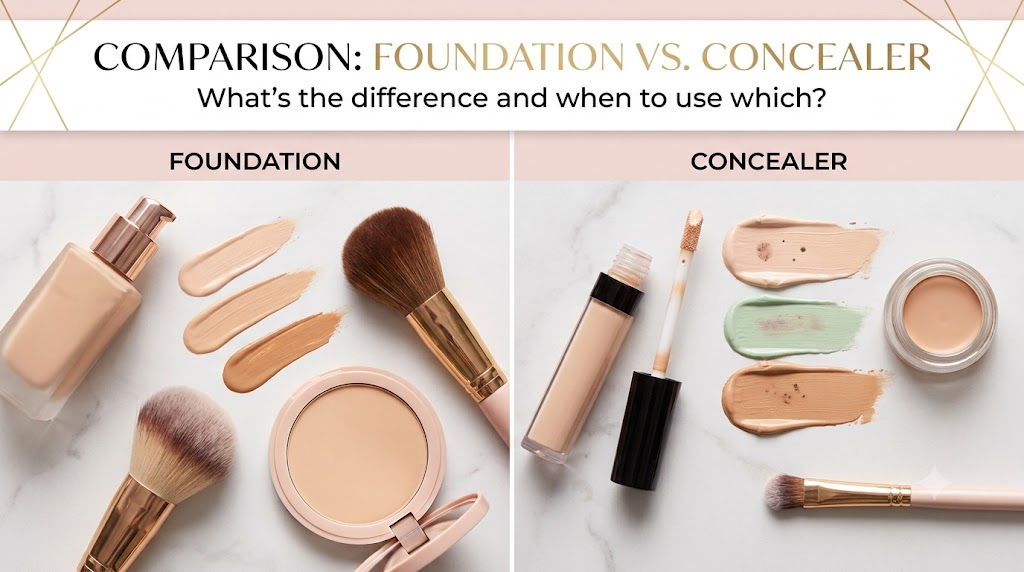
In Part 1, we explored the fundamental differences between foundation and concealer and discovered that they aren’t competing products—they’re designed to work together. Foundation creates an even-looking complexion, while concealer provides extra coverage exactly where it’s needed.
Now it’s time to answer the practical questions. Which product should you apply first? Can concealer replace foundation? And do you really need both in your everyday makeup routine?
Which Should You Apply First?
For most makeup routines, foundation comes first.
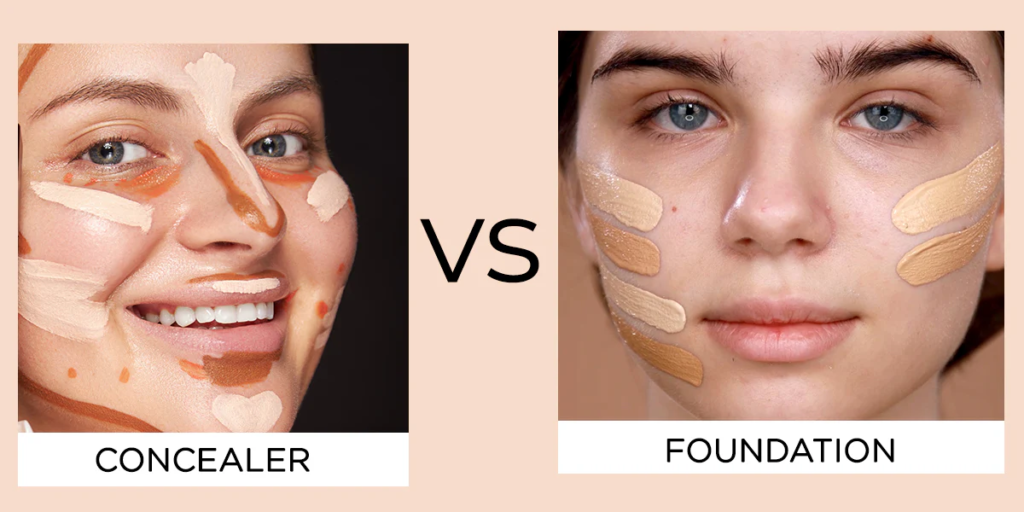
This may seem surprising, especially if you’ve seen different techniques on social media, but there’s a simple reason behind it. Foundation often corrects much more than we expect. Once you’ve evened out your overall skin tone, redness around the nose may look less noticeable, minor blemishes may blend into the skin, and dark circles may appear softer.
At that point, you’ll usually need far less concealer.
Using foundation first also helps prevent one of the most common beginner mistakes—applying too much product. Instead of layering heavy concealer over areas that foundation could have covered naturally, you only add extra coverage where it’s truly necessary.
There are exceptions. If you’re using a color corrector for severe dark circles or pronounced discoloration, that product is generally applied before foundation. However, for everyday makeup, applying foundation first and concealer second remains the easiest and most reliable technique.
Can Concealer Replace Foundation?
The short answer is yes—but only in certain situations.
If you have relatively even skin and only want to cover a few imperfections, concealer alone can create a fresh, natural look. Many people now prefer this “spot concealing” technique because it allows more of their real skin to remain visible.
For example, you might apply concealer beneath the eyes, around the nose, and on a couple of blemishes while leaving the rest of your complexion untouched. After blending carefully, the result often looks lighter and more natural than wearing foundation across the entire face.
This approach works especially well for everyday errands, casual outings, or anyone who prefers minimal makeup.
However, if your skin has noticeable redness, uneven pigmentation, or widespread discoloration, foundation will usually create a more balanced finish. Trying to cover large areas with concealer alone often requires more product than necessary, making the skin appear heavier rather than more flawless.
Beauty Insight
One technique frequently used by professional makeup artists is called spot concealing.
Instead of applying a full face of foundation, they use lightweight foundation—or sometimes no foundation at all—and strategically place concealer only where the eye naturally notices imperfections.
The result isn’t skin that looks “perfect.”
It’s skin that looks real.
Do You Always Need Both?
Not at all.
The best makeup routine is the one that suits your skin and your lifestyle—not the one that uses the most products.
If your complexion is naturally even, a lightweight foundation or skin tint may be all you need. If you’re in a hurry and simply want to brighten your under-eye area or hide a blemish, concealer alone can be enough.
For events, photographs, weddings, or long days when you want your makeup to look especially polished, combining foundation and concealer usually delivers the most refined result.
Rather than asking whether you should use both, ask yourself whether each product solves a problem you actually have.
That simple mindset often leads to a more natural-looking makeup routine and fewer unnecessary purchases.
Common Mistakes That Make Your Base Look Heavy
Even with the right products, a few small mistakes can make your complexion appear less natural.
One of the most common is choosing a concealer that’s dramatically lighter than your skin tone. While a slightly lighter shade can brighten the under-eye area, going several shades lighter often creates obvious patches that are difficult to blend.
Another mistake is using concealer as foundation. Because concealer is thicker and more pigmented, applying it across the entire face can emphasize pores, texture, and fine lines.
Many beginners also believe that full coverage automatically means flawless skin. In reality, building thin layers and blending carefully almost always produces a fresher, more skin-like finish than applying one heavy layer.
Finally, remember that your skin has natural texture. Makeup should enhance your complexion—not erase every tiny detail.
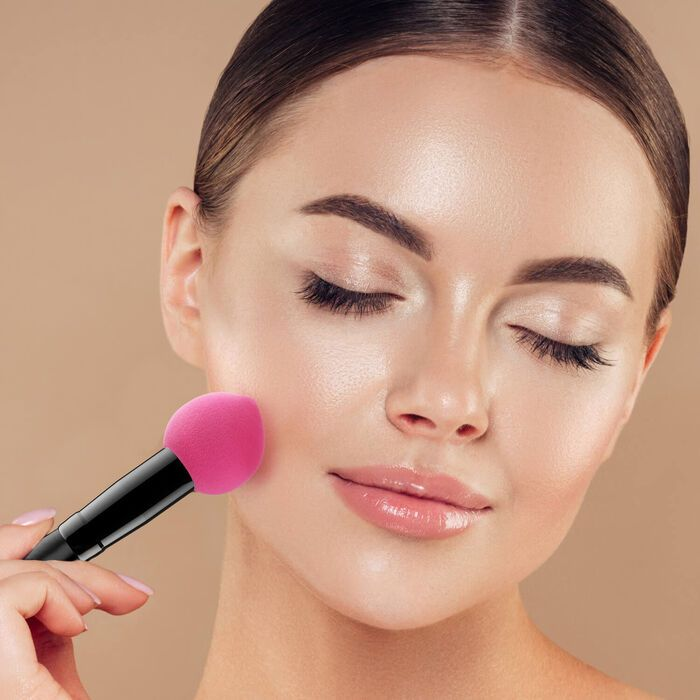
Quick Tips
✔ Apply foundation first to create an even base.
✔ Use concealer only where additional coverage is needed.
✔ Blend every layer before adding more product.
✔ Choose formulas that match your skin type—not just what’s trending.
✔ Remember that natural-looking skin is often more beautiful than perfectly covered skin.
Final Thoughts
Foundation and concealer may sit side by side on store shelves, but they were never designed to replace one another. Each serves a unique purpose, and understanding that difference is one of the easiest ways to improve your makeup routine.
Foundation creates harmony across your complexion by evening out your skin tone, while concealer focuses on the small details that foundation can’t fully address. Used together, they create a balanced, natural-looking finish. Used separately, each can still be incredibly effective when chosen for the right situation.
Ultimately, great makeup isn’t about applying more products—it’s about applying the right products with intention. Once you understand what each product is designed to do, you’ll spend less time chasing flawless coverage and more time enhancing the features that make your skin uniquely yours.