Let’s be entirely honest for a moment. Working from home is a beautiful luxury, but it is also a masterclass in psychological warfare.
In the beginning, we all fell for the romance of it—answering emails in bed, tapping away at the kitchen island, or balancing a laptop on our laps while the TV hummed in the background. But eventually, reality hits. Your lower back starts to ache, the pile of laundry across the room suddenly demands your attention during a deep-work block, and your productivity completely plummets.
I spent months trapped in this exact cycle, trying to force creative output from spaces that were meant for rest. That is when I realized your environment isn’t just a backdrop for your day; it is the foundation of your focus.
The Sanctuary Shift
“I didn’t just need a place to put my laptop; I needed a curated sanctuary that signaled to my brain it was time to build, create, and execute.”
Here is exactly how I designed a home office that balances editorial aesthetics with ruthless productivity. 👇
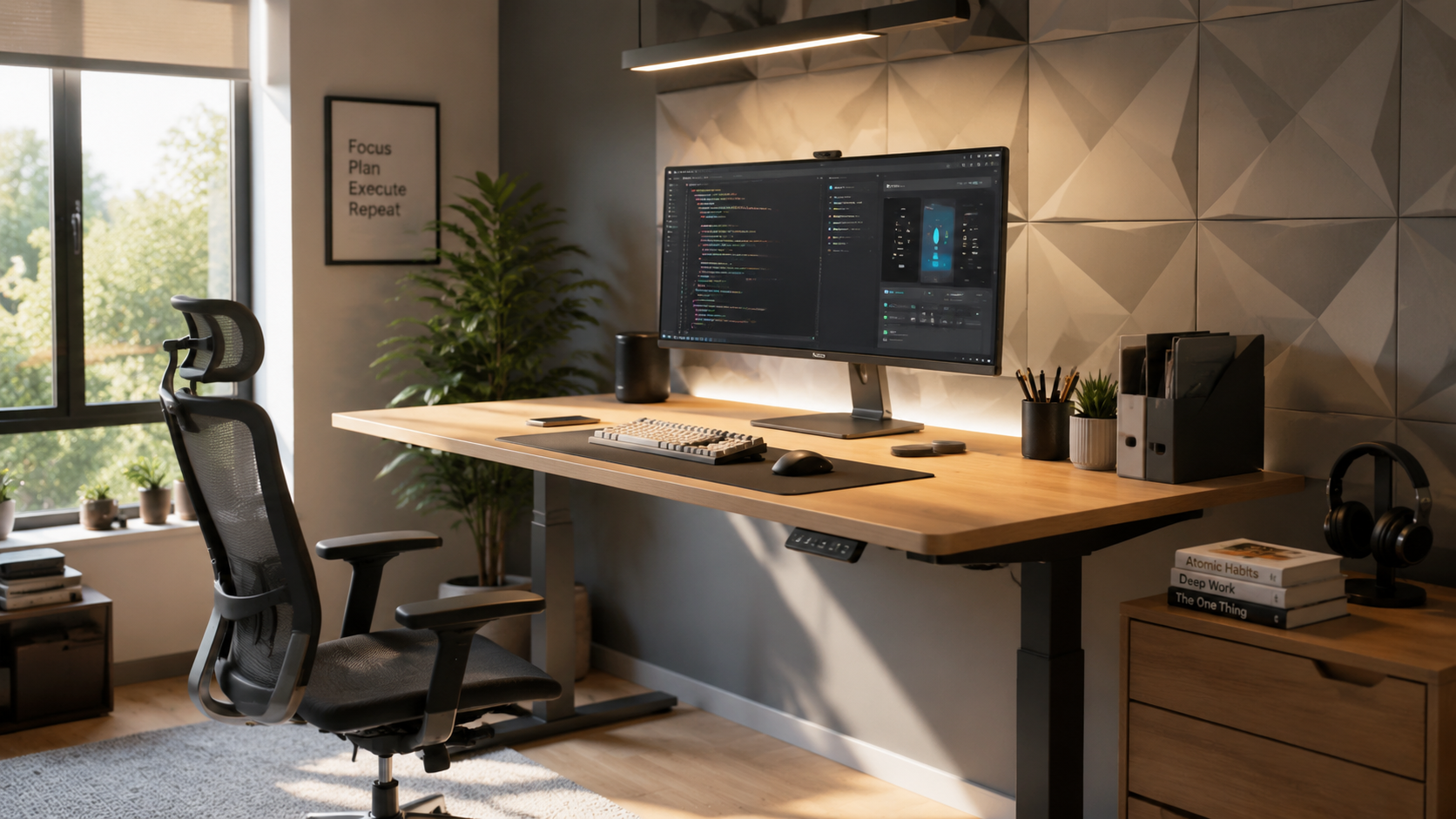
1. The Core Anchor: Choosing a Desk and Chair That Prioritize Your Body
For the longest time, I fell into the “aesthetic trap.” I bought a gorgeous, mid-century modern console table to use as a desk. It looked stunning on my Instagram feed, but it was too narrow for my monitors, lacked drawer space, and left me with bruised knees. On top of that, I refused to buy a traditional ergonomic office chair because, quite frankly, most of them look like they belong in a sci-fi spaceship cockpit rather than a curated home.
The breakthrough came when I stopped compromising and started looking for intelligent design. Your desk and chair are your primary tools; if they cause physical discomfort, your focus will fracture within an hour.
The Actionable Blueprint
Opt for a desk with a depth of at least 24 to 30 inches. This ensures your monitors sit at a comfortable distance from your eyes, reducing strain and leaving ample room for a physical notebook or keyboard.
Look for brands that bridge the gap between form and function. I opted for a task chair upholstered in a neutral linen blend that features hidden, adjustable lumbar support. You don’t need ugly black plastic to save your spine.
Visual clutter is cognitive clutter. I mounted a heavy-duty steel cable management tray beneath my desk and used Velcro ties to bundle cords. If a wire doesn’t absolutely need to be visible, it shouldn’t be seen.
2. Layered Lighting: Setting the Mood for Flow State
I used to think lighting was just about being able to see my keyboard. I was relying on a harsh, overhead builder-grade light fixture that gave me mild headaches by 3:00 PM. When the afternoon slump hit, my instinct was to close my laptop and call it a day.
Lighting dictates your circadian rhythm and your focus. To build an environment optimized for deep work, you need to abandon the idea of a single light source and embrace layered lighting. By mixing natural light, task lighting, and ambient warmth, you can control the energy of the room throughout the day.
The Golden Rule of Workspace Lighting: Never position your desk directly facing a bright, unshaded window (which causes intense eye strain from glare) or directly backing it (which creates annoying shadows on your screen). Instead, position your desk perpendicular to natural light sources.
How to Layer Your Lights
Natural Light
Boosts mood and keeps you alert during morning hours.
Desk placed at a 90-degree angle to the window with sheer linen curtains to diffuse harsh sunlight.
Task Lighting
Pinpoints illumination exactly where you are reading or writing.
An architectural matte-black swing-arm brass lamp with a focused beam on my left-hand side.
Ambient Lighting
Softens the atmosphere and reduces screen contrast in the evening.
A warm-toned (2700K) smart bulb in a ceramic floor lamp in the corner, scheduled to dim as the sun sets.
3. The Clutter Threshold: Curating Inspiration Without the Distraction
As a lifestyle blogger, I love beautiful things. Crystals, ceramic vases, linen-bound notebooks, and tinted glassware are my weaknesses. However, there is a very fine line between a beautifully styled shelf and a chaotic desk that pulls your attention in twenty different directions.
Every item allowed onto your desk surface should pass a strict test: Does it serve a functional purpose, or does it ground your energy? If it does neither, it belongs in a closed drawer or on a display shelf across the room.
My Non-Negotiable Desk Essentials
A Signature Scent
I light a specific candle (sandalwood and amber) only when I am entering a deep-work block. Over time, my brain has associated this specific scent with high focus.
Tactile Tools
Swap out cheap plastic pens for a weighted, brass rollerball pen and a high-quality linen journal. The tactile experience of writing notes by hand makes the work feel intentional and grounded.
The “One Green Thing” Rule
A single, low-maintenance plant—like a sleek Snake Plant or a trailing Pothos—adds organic lines to an otherwise linear, tech-heavy desk space. It breathes life into the setup without demanding constant upkeep.
4. Establishing Psychological Boundaries in Shared Spaces
If your home office is tucked into a corner of your bedroom or living room, you know the unique pain of never truly feeling “off the clock.” When your workspace is constantly staring at you from across the room, your brain struggles to transition into relaxation mode at night.
To combat this, I had to create visual and psychological boundaries that signal the beginning and end of the workday, even without a physical door to close.
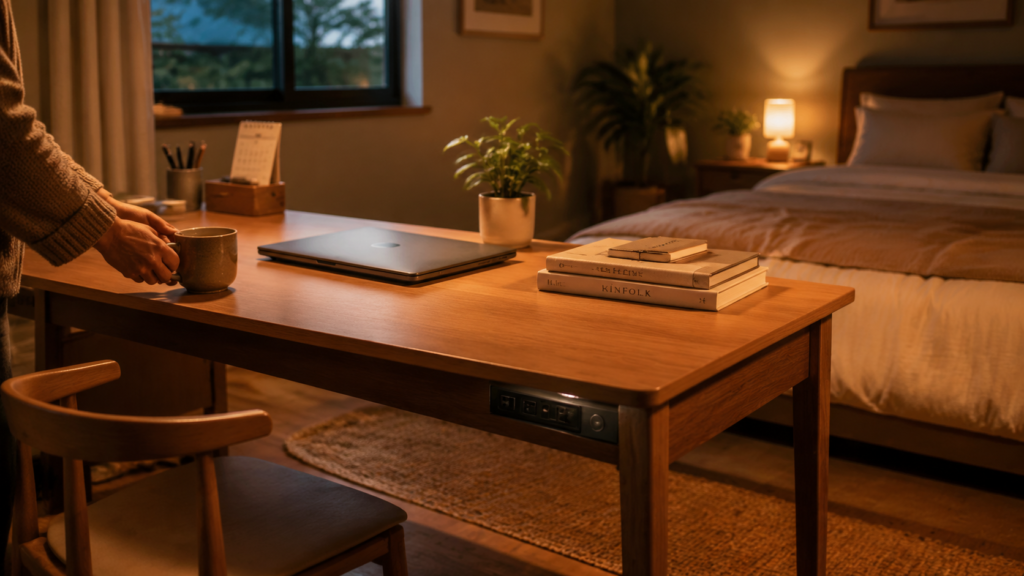
Daily Rituals to Reclaim Your Space:
- The Sensory Zone: Use a distinct area rug to visually anchor your office zone. When my feet are on the jute rug under my desk, I am at work. When I step off, I am home.
- The 6:00 PM Shutdown: At the end of every workday, I close my laptop, place it inside a dedicated desk drawer, and clear any stray coffee mugs. Out of sight truly means out of mind.
- The Digital Cleanse: Turn off your desk power strip at night if it has LED indicator lights. Eliminating those tiny, blinking tech lights prevents your brain from subconsciously tracking your workspace while you are trying to wind down.
Conclusion
Designing a beautiful, highly productive home office isn’t about chasing fleeting interior design trends or recreating an unattainable Pinterest board. It is an ongoing act of self-care and professional respect. When you take the time to intentionally curate your desk depth, optimize your lighting, manage your clutter, and set clear boundaries, you are telling yourself that your work, your time, and your energy matter. Your space has the power to either drain your momentum or amplify your potential. Choose to design a space that lifts you up, holds your focus, and inspires you to show up as the best version of yourself every single day.