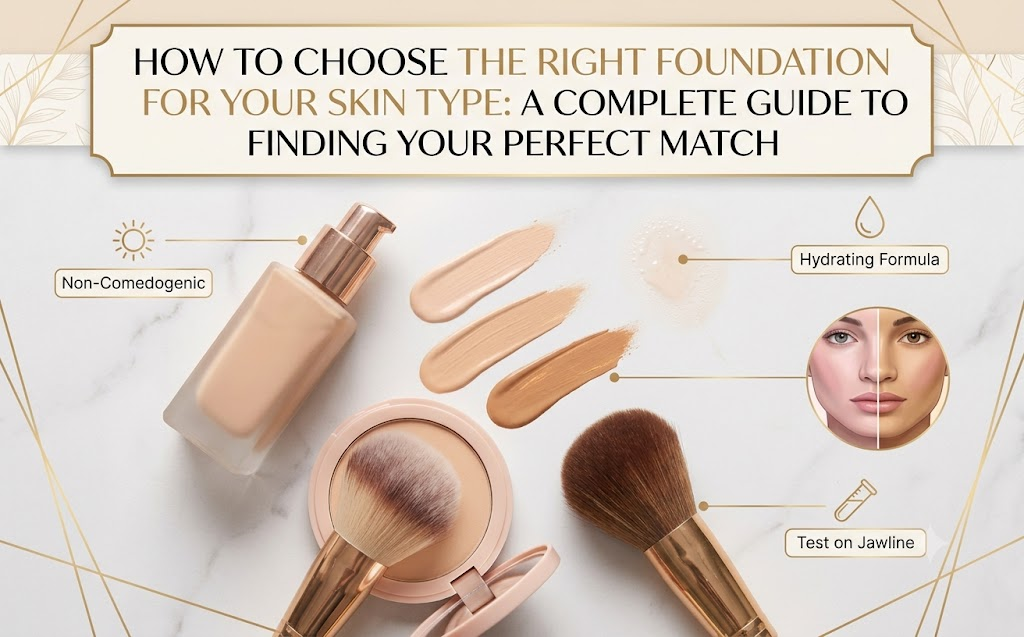
Why the “Perfect” Foundation Often Isn’t Perfect
Finding the right foundation can feel surprisingly frustrating. You discover a shade that looks flawless under store lighting, only to realize a few hours later that it appears too dark, settles into dry patches, or disappears from your oily T-zone.
The problem isn’t always the foundation itself—it’s choosing one that doesn’t match your skin’s unique needs.
A great foundation should do more than simply cover imperfections. It should blend naturally, complement your skin type, and stay comfortable throughout the day. Understanding your skin before you shop is the first step toward achieving a makeup look that feels effortless rather than heavy.
In this guide, you’ll learn how to choose a foundation that works with your skin, not against it.

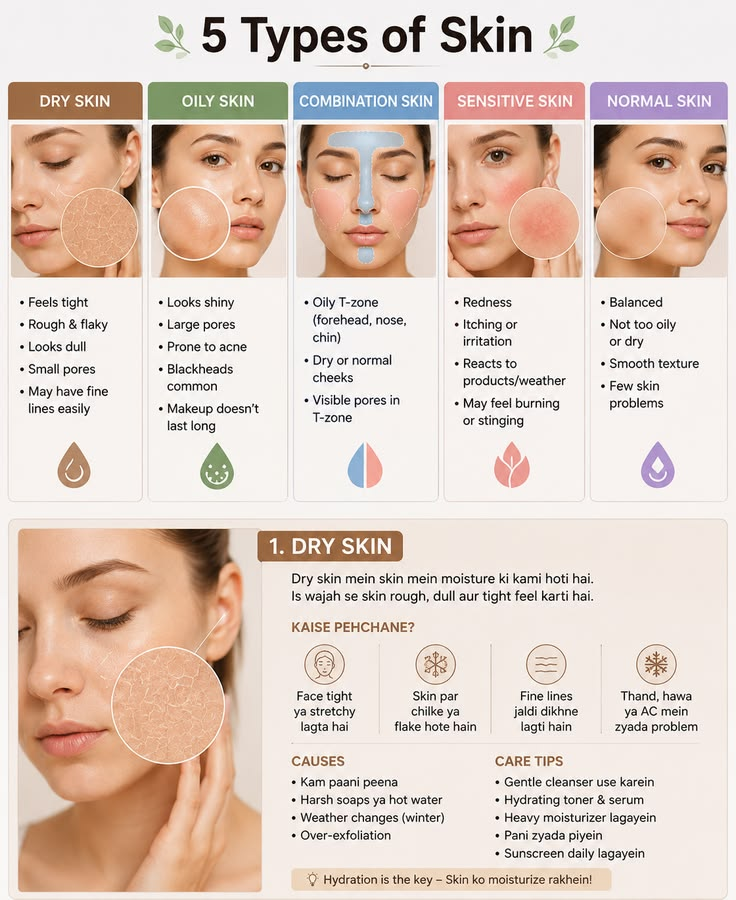
Step 1: Know Your Skin Type Before You Buy
The same foundation can look completely different on two people because skin type affects how makeup wears throughout the day.
Oily Skin
If your face becomes shiny within a few hours, especially around the forehead, nose, and chin, you likely have oily skin.
Look for:
- Matte or oil-free foundations
- Long-wear formulas
- Non-comedogenic products
These formulas help control excess shine without feeling heavy.
Dry Skin
Dry skin often feels tight and may show flaky patches, especially during colder months.
Choose foundations labeled:
- Hydrating
- Dewy
- Radiant
- Moisturizing
Avoid overly matte formulas, as they can emphasize dryness and fine lines.
Combination Skin
Combination skin usually has an oily T-zone with normal or dry cheeks.
A natural or satin-finish foundation is often the safest choice because it balances both areas without making either one look worse.
Sensitive Skin
If your skin reacts easily to new products, keep the ingredient list simple.
Look for:
- Fragrance-free formulas
- Dermatologist-tested products
- Foundations designed for sensitive skin
Patch testing before full application is always a good idea.
Mature Skin
As skin ages, it naturally loses moisture and elasticity.
Lightweight, hydrating foundations with a natural finish usually create a smoother appearance than thick, full-coverage products, which may settle into fine lines.
Step 2: Choose the Right Foundation Finish
The finish of your foundation affects the final look just as much as the shade.
Matte Finish
Best for:
- Oily skin
- Humid climates
- Long workdays
A matte finish reduces shine and creates a smooth, polished appearance.
Natural Finish
If you’re unsure where to start, a natural finish is one of the most versatile options.
It mimics the appearance of healthy skin without looking overly matte or overly glowy, making it suitable for most skin types.
Dewy or Radiant Finish
These formulas reflect more light, giving the skin a fresh, hydrated appearance.
They’re ideal for:
- Dry skin
- Dull complexions
- Mature skin
However, people with very oily skin may find that dewy foundations become shiny more quickly.
Step 3: Choose the Coverage You Actually Need
Many people assume that more coverage means better makeup.
In reality, the best coverage is simply the amount your skin needs.
Light Coverage
Perfect for everyday wear when you only want to even out your skin tone while letting your natural complexion show through.
Medium Coverage
A great all-round option that hides mild redness and uneven pigmentation while still looking natural.
Full Coverage
Best reserved for special occasions or when covering more noticeable discoloration or blemishes.
Applying a heavy foundation every day isn’t always necessary—and often doesn’t look as natural as a lighter formula paired with a good concealer.
Step 4: Find Your Perfect Shade and Undertone
Choosing the right shade is just as important as choosing the right formula. Even a high-quality foundation can look unnatural if the color doesn’t match your skin.
A common mistake is testing foundation on the back of your hand. Since your hands are often a different color than your face, this method can be misleading.
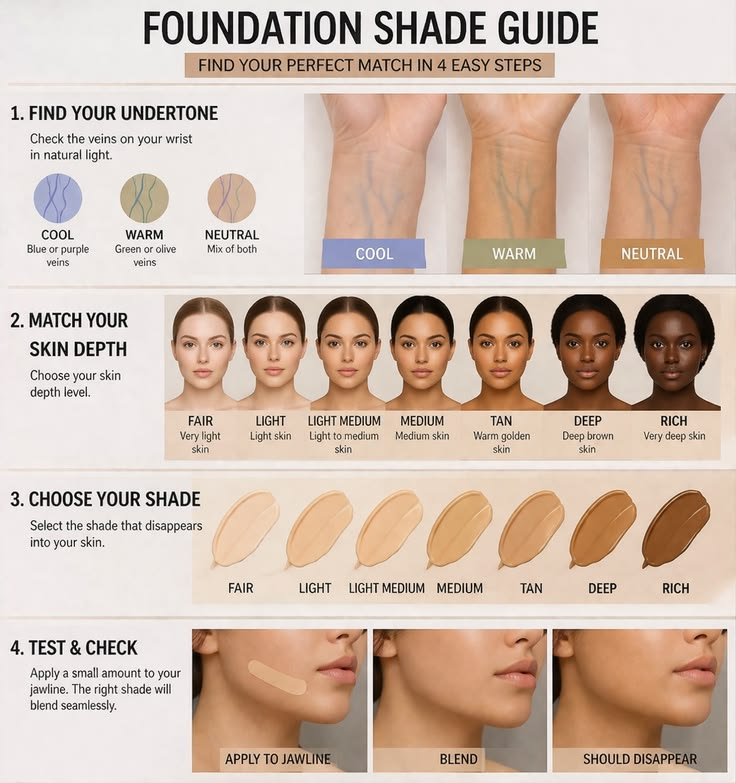
Instead, apply a small amount of foundation along your jawline. The right shade should blend seamlessly into both your face and neck, almost disappearing into your skin.
Understand Your Undertone
Your undertone is the subtle color beneath your skin’s surface, and it stays the same even if your skin gets lighter or darker throughout the year.
- Warm Undertones – Skin has golden, yellow, or peach tones. Gold jewelry often looks more flattering.
- Cool Undertones – Skin has pink, red, or blue tones. Silver jewelry usually complements these tones better.
- Neutral Undertones – A balanced mix of warm and cool tones, making it easier to wear a wide range of foundation shades.
- Olive Undertones – Skin has a subtle green or golden tint and may require foundations specifically designed for olive complexions.
When you’re between two shades, it’s usually better to choose the slightly lighter one and add warmth with bronzer rather than selecting a foundation that’s too dark.
Step 5: Test Before You Commit
Foundation can look very different after it’s been on your skin for a few hours.
Before buying a full-size bottle, follow these simple steps:
- Test the foundation on your jawline, not your hand.
- Check the color in natural daylight whenever possible.
- Wait 10–15 minutes to see if the foundation oxidizes (becomes darker after exposure to air).
- If you can, wear it for several hours to see how it performs throughout the day.
- Notice whether it stays comfortable, separates, or settles into fine lines.
A foundation that looks great for five minutes isn’t necessarily the right one for an eight-hour workday.
Common Foundation Mistakes to Avoid
Even the perfect foundation won’t perform well if it’s used incorrectly. Here are a few mistakes that are easy to avoid:
Choosing Based Only on Trends
A viral foundation may work beautifully for someone else’s skin but not for yours. Focus on your skin type instead of social media hype.
Skipping Skincare
Foundation always looks better on well-prepared skin. Cleanse, moisturize, and apply sunscreen before makeup. If needed, use a primer that suits your skin concerns.
Wearing the Same Shade All Year
Your skin tone often changes with the seasons. You may need a slightly lighter shade in winter and a deeper shade during summer.
Applying Too Much Product
More foundation doesn’t always create a better finish. Start with a thin layer and build coverage only where needed.
Ignoring Expiration Dates
Old foundation can separate, change color, or become contaminated with bacteria. Replace expired products to maintain both performance and skin health.
Final Thoughts
Finding the right foundation isn’t about buying the most expensive brand or following the latest beauty trend. It’s about understanding your skin and choosing a formula that complements its natural characteristics.
Start by identifying your skin type, then consider the finish, coverage, and undertone that best match your needs. Don’t rush the process—testing a foundation in natural light and wearing it for a few hours can save you from buying a product that looks great in the store but disappoints at home.
The best foundation is one that feels comfortable, blends seamlessly into your skin, and enhances your natural complexion rather than masking it.
When your foundation works with your skin instead of against it, makeup becomes less about covering imperfections and more about highlighting your confidence.