Have you ever stood in the beauty aisle, looking at rows of foundation bottles and concealer tubes, wondering if you really need both? Or perhaps you’ve watched a makeup tutorial where the creator effortlessly applies several complexion products, leaving you more confused than informed.
You’re not alone.
Foundation and concealer are often introduced as essential makeup products, yet they’re also among the most misunderstood. Because they come in similar shades and are both designed to improve the appearance of your skin, many beginners assume they’re interchangeable. Some people apply concealer all over the face instead of foundation, while others skip concealer entirely, believing foundation should be enough.
The reality is much simpler—and much more practical.
Although foundation and concealer belong to the same family of complexion products, they perform very different roles. Understanding those roles will help you create a lighter, more natural-looking base, avoid unnecessary layers of makeup, and choose products that truly fit your skin and lifestyle.
Rather than asking, “Which product is better?” the better question is, “What is each product designed to do?”
By the end of this guide, you’ll have a clear answer.
In This Guide
You’ll learn:
- What foundation is and why it’s considered the base of your makeup.
- How concealer differs from foundation.
- Why these products work best together instead of replacing one another.
- How professionals decide when to use one—or both.
- The most common mistakes beginners make.
Understanding Foundation: The Product That Creates the Canvas
Foundation is exactly what its name suggests—the foundation of your makeup.
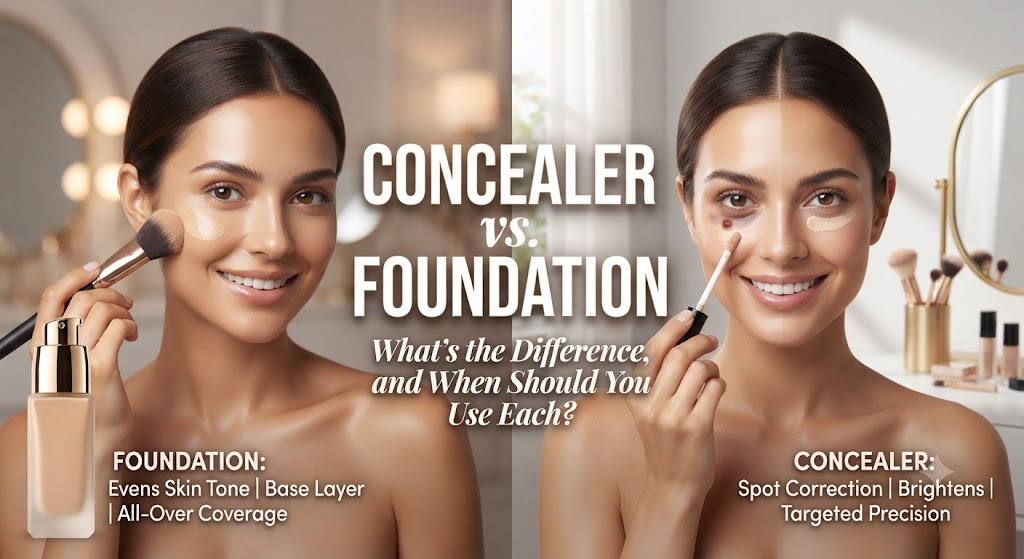
Its primary purpose isn’t to completely hide every mark or blemish. Instead, foundation creates a more even-looking complexion by reducing the appearance of redness, uneven skin tone, and minor discoloration across the face.
Think of it as adjusting the lighting in a room rather than repainting the walls. Your skin still looks like skin, but everything appears more balanced, smoother, and healthier.
Modern foundations are available in an impressive range of finishes and coverage levels. Some offer sheer coverage that simply enhances your natural complexion, while others provide enough coverage for special occasions, photography, or events where you want a more polished look.
Choosing the right foundation is less about buying the product with the highest coverage and more about finding a formula that complements your skin type.
For example, lightweight, hydrating foundations tend to work beautifully on dry or mature skin because they maintain a fresh, radiant appearance. Oily skin often benefits from soft-matte or long-wearing formulas that help control shine without looking flat.
What’s important to remember is that foundation is designed to create consistency, not perfection. If your freckles still peek through or a small blemish remains visible, that doesn’t mean your foundation has failed. In fact, allowing some of your natural skin to show often creates the most believable and flattering result.
Understanding Concealer: Precision Instead of Coverage
While foundation works across the entire face, concealer is much more focused.
It is formulated with a higher concentration of pigment, allowing it to deliver stronger coverage exactly where it’s needed. Rather than changing your whole complexion, concealer solves small, specific concerns that foundation alone may not fully address.
The most common uses include brightening dark under-eye circles, disguising blemishes, minimizing redness around the nose, and softening the appearance of post-acne marks or uneven pigmentation.
Because it’s more concentrated, concealer should be used strategically.
Applying it only where needed keeps your makeup lightweight and natural. Covering the entire face with concealer may seem like a way to achieve flawless skin, but it often creates the opposite effect by emphasizing texture and making makeup appear heavy.
Today’s beauty industry also offers several types of concealers, each designed for a particular purpose. Hydrating formulas work well beneath the eyes because they remain comfortable throughout the day, while matte concealers provide better longevity on blemishes. Color-correcting concealers—such as green, peach, or yellow—help neutralize discoloration before skin-toned products are applied.
Understanding these differences allows you to choose the right tool for the right job instead of expecting one product to solve every complexion concern.
Beauty Insight
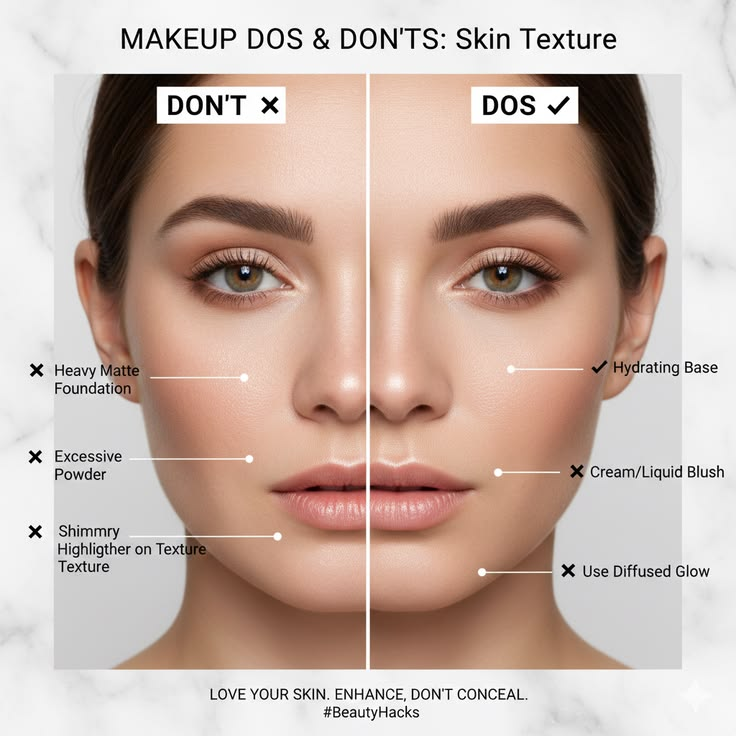
One of the biggest misconceptions in makeup is that more coverage automatically means better-looking skin.
Professional makeup artists often take the opposite approach. They start with a light layer of foundation to even out the complexion, then use small amounts of concealer only where additional coverage is truly needed.
This technique keeps the skin looking fresh, natural, and expressive instead of overly perfected.
In other words, the goal isn’t to hide your skin—it’s to create balance.
Why These Products Aren’t Competitors
It’s tempting to compare foundation and concealer as though one should replace the other.
In reality, they’re designed to work together.
Foundation creates harmony across your complexion, while concealer fine-tunes the details. One prepares the canvas; the other perfects it.
When used this way, you’ll often find that you need far less of both products than you expected. Your makeup feels lighter, blends more seamlessly, and is less likely to crease or look cakey as the day goes on.
Understanding this relationship is one of the biggest turning points for anyone learning makeup, because it shifts the focus from adding more coverage to applying products with purpose.
Wrapping Up Part 1
By now, it’s clear that foundation and concealer are not interchangeable—even though they often look similar on the shelf. Foundation is designed to create an even, balanced complexion across the entire face, while concealer provides targeted correction exactly where extra coverage is needed.
Learning the difference isn’t about following makeup rules; it’s about understanding the purpose behind each product. Once you know what each one is meant to do, building a routine becomes much simpler, and your makeup naturally begins to look lighter, fresher, and more polished.
In Part 2, we’ll move from theory to practice. You’ll learn when to apply foundation and concealer, whether you really need both, the common mistakes that make your base look heavy, and the professional techniques that create a seamless, skin-like finish.