Skincare is no longer only about traditional creams, cleansers, and serums. Today, technology is becoming a major part of how people understand, choose, and use skincare products. From AI skin analysis apps to smart beauty devices, personalized product recommendations, and virtual consultations, beauty tech is changing the way people care for their skin.
Beauty tech combines beauty, science, and digital innovation. It helps people make smarter skincare decisions instead of guessing what their skin needs. In the past, many people chose products based on trends, advertising, or advice from friends. Now, technology can help analyze skin concerns, track changes, and recommend products that are more suitable for each person’s skin type and lifestyle.
The future of skincare is becoming more personalized, data-driven, and convenient. Beauty tech is not replacing basic skincare, but it is making skincare routines smarter, easier, and more effective.
What Is Beauty Tech?
Beauty tech refers to the use of technology in beauty, skincare, and personal care. It includes smart skincare devices, AI-powered apps, virtual skin consultations, personalized skincare quizzes, digital skin scanners, LED masks, cleansing tools, and even smart mirrors.
The goal of beauty tech is to help people better understand their skin and choose products or treatments more confidently. Instead of buying random products and hoping they work, users can rely on data, digital analysis, and customized recommendations.
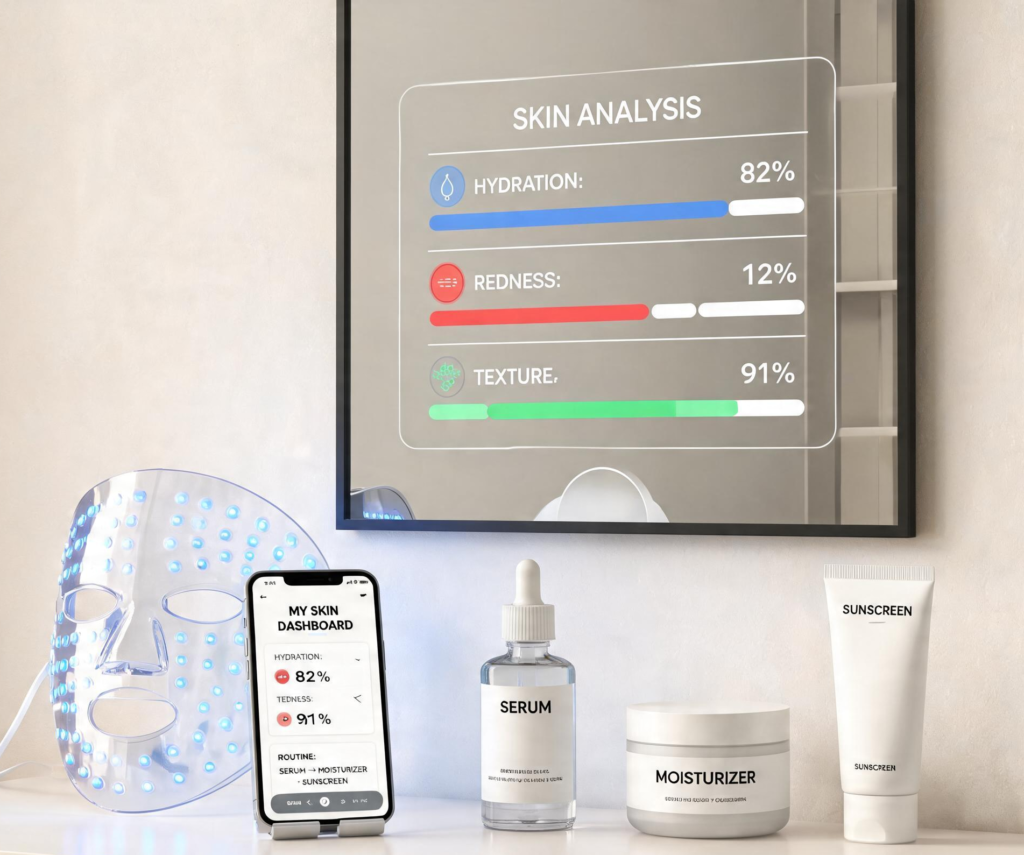
Beauty tech can be simple or advanced. A basic skincare quiz that recommends products based on your skin type is one form of beauty tech. A smart mirror that analyzes hydration, pores, redness, and fine lines is a more advanced example. Both are part of a growing movement toward smarter skincare.
AI Skin Analysis Makes Skincare More Personal
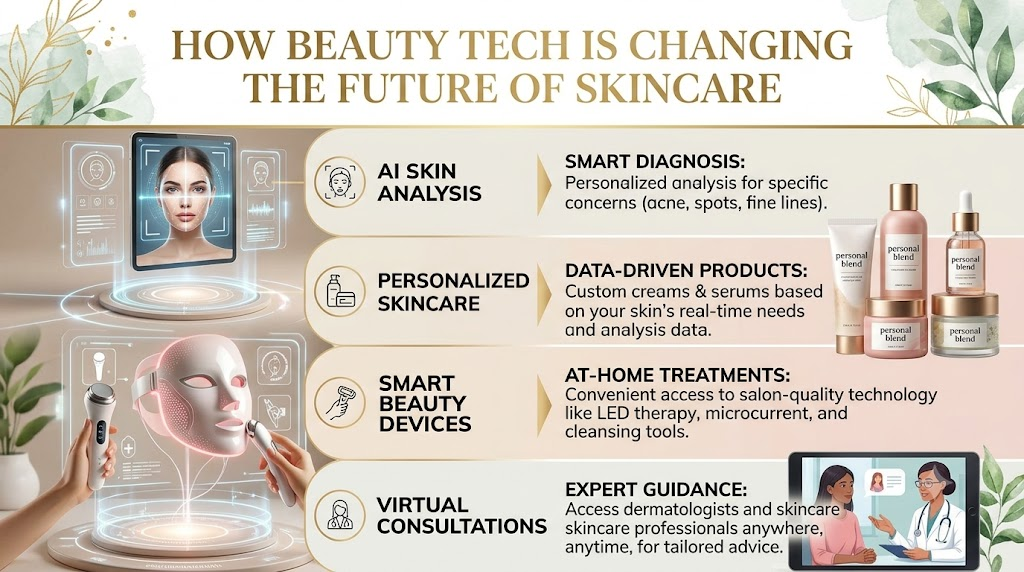
One of the biggest ways beauty tech is changing skincare is through AI skin analysis. These tools often use a photo of your face to detect visible concerns such as acne, dark spots, redness, fine lines, enlarged pores, dryness, or uneven texture.
AI skin analysis helps people understand their skin more clearly. Many people do not know whether their skin is dry, oily, combination, dehydrated, or sensitive. A digital tool can offer a starting point and suggest which ingredients or products may be suitable.
For example, if the analysis shows dryness and dullness, the app may suggest hydrating ingredients like hyaluronic acid, glycerin, or ceramides. If it detects dark spots, it may recommend brightening ingredients such as vitamin C, niacinamide, or alpha arbutin.
AI cannot fully replace a dermatologist, especially for serious skin conditions, but it can help everyday users make better skincare choices.
Personalized Skincare Is Becoming The New Standard
In the future, skincare will become less “one-size-fits-all” and more personalized. Beauty tech makes it easier for brands to create product recommendations based on each person’s skin type, concerns, age, environment, and lifestyle.
Personalized skincare platforms may ask questions about your skin condition, sensitivity level, climate, routine, sleep, stress, and product preferences. Then they suggest products that match your needs.
This is helpful because two people can have the same skin type but very different concerns. For example, two people may both have oily skin, but one may struggle with acne while the other may struggle with dehydration. Personalized skincare helps create a routine that is more specific and useful.
As technology improves, skincare recommendations may become even more accurate. Apps may track your skin over time and adjust your routine depending on weather, hormones, stress, or seasonal changes.
Smart Beauty Devices Bring Treatments Home
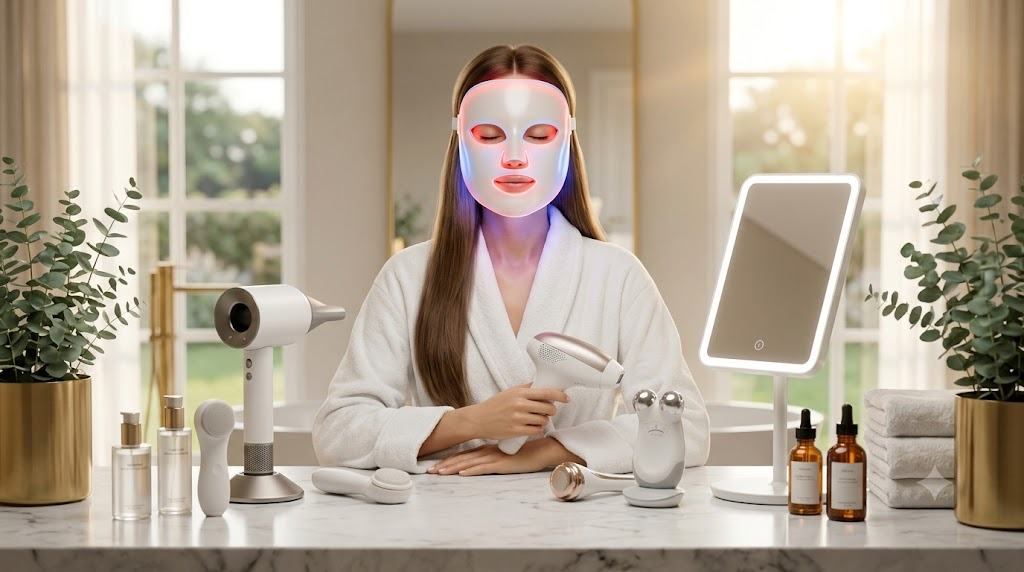
At-home beauty devices are another major part of the beauty tech movement. Devices like LED masks, facial cleansing brushes, microcurrent tools, facial massagers, and skin scanners are making advanced skincare feel more accessible.
LED masks are popular for supporting different skin goals. Red light is often used for anti-aging support and skin recovery, while blue light is commonly associated with acne-prone skin. Facial cleansing devices can help remove makeup, sunscreen, oil, and dirt more thoroughly. Microcurrent devices may help improve the appearance of firmness and facial tone when used consistently.
These tools allow people to enjoy a more spa-like experience at home. However, they should be used safely and realistically. Beauty devices usually need consistent use over time, and they work best when combined with a good basic routine.
Virtual Consultations Make Skincare More Accessible
Beauty tech is also making professional skincare advice more accessible. Virtual consultations allow users to speak with skincare experts, estheticians, or dermatology professionals without visiting a clinic in person.
This can be helpful for people who feel overwhelmed by product choices or do not know where to start. A virtual consultation can help identify skin concerns, review current products, and create a more suitable routine.
Online consultations are especially useful for people in areas where skincare clinics are not easy to access. They also save time and make expert guidance more convenient.
However, serious skin concerns such as severe acne, eczema, allergic reactions, or painful irritation should still be treated by a qualified medical professional.
Smart Mirrors And Skin Tracking Tools
Smart mirrors and skin tracking tools are becoming more popular in modern skincare. These devices can analyze the skin and track changes over time. Some smart mirrors may detect pores, wrinkles, spots, redness, and texture.
This type of technology helps users see whether their routine is actually working. Instead of relying only on memory or daily appearance, users can compare skin progress over weeks or months.
Skin tracking can also help people avoid unnecessary product changes. Many skincare products take time to show results. When people track their skin properly, they may become more patient and consistent with their routine.
In the future, smart mirrors may connect with skincare apps, weather data, and product recommendations to create a fully personalized skincare system.
Beauty Tech Helps Reduce Product Waste
Another benefit of beauty tech is that it can help reduce waste. Many people buy skincare products that do not suit their skin, use them a few times, and then stop. This creates wasted money and unnecessary product waste.
With better analysis and personalized recommendations, users may be able to choose products more carefully. This means fewer random purchases and more intentional skincare routines.
Beauty tech can also help people avoid overbuying. Instead of collecting many serums, creams, and masks, users can focus on what their skin actually needs.
A smarter skincare routine is not always a longer routine. In many cases, it is a simpler routine with better product choices.
The Role Of Data In Future Skincare
Data will play a big role in the future of skincare. Apps and devices may collect information about skin condition, routine habits, product use, weather, sleep, and lifestyle. This information can help create better skincare recommendations.
For example, if your skin becomes drier in winter, your app may suggest a richer moisturizer. If UV levels are high, it may remind you to reapply sunscreen. If your skin barrier looks irritated, it may suggest pausing strong active ingredients.
This kind of data-driven skincare can make routines more flexible and responsive. Instead of using the same routine all year, people can adjust based on what their skin needs at the moment.
Beauty Tech Does Not Replace Skincare Basics
Even though beauty tech is exciting, it should not replace basic skincare habits. No device or app can replace gentle cleansing, moisturizing, sunscreen, and consistency.
A strong skincare routine still starts with the basics. Cleanse your skin without stripping it. Use moisturizer to support your skin barrier. Apply sunscreen every morning to protect your skin from UV damage. Choose active ingredients carefully and introduce them slowly.
Beauty tech works best when it supports these habits. Technology can guide your choices, but healthy skin still depends on daily care.
Common Mistakes When Using Beauty Tech
One common mistake is expecting instant results. Many beauty devices and skincare tools need regular use over time. Results are usually gradual.
Another mistake is using too many devices or products at once. This can irritate the skin and make it hard to know what is helping. Start with one tool or product and see how your skin responds.
Some people also trust technology too much. AI apps and beauty devices are helpful, but they are not perfect. If your skin is painful, inflamed, or reacting badly, professional advice is still important.
Finally, do not skip sunscreen. Beauty tech can help improve your routine, but sunscreen remains one of the most important products for long-term skin health.
Conclusion
Beauty tech is changing the future of skincare by making routines smarter, more personal, and easier to understand. AI skin analysis, personalized skincare platforms, smart beauty devices, virtual consultations, and skin tracking tools are helping people make better decisions for their skin.
The future of skincare will likely become more customized and data-driven. Instead of guessing what products to use, people will be able to choose routines based on their skin type, concerns, lifestyle, and real-time changes.
Still, the foundation of healthy skin remains the same: gentle cleansing, daily hydration, sunscreen, and consistency. Beauty tech is not about making skincare more complicated. It is about helping people care for their skin in a smarter and more effective way.