Is Your Skin Trying to Tell You Something?
Have you ever stood in front of the mirror wondering why your skin suddenly looks dull, why your favorite moisturizer no longer seems effective, or whether those tiny lines around your eyes are actually becoming more noticeable? For many people, skincare starts with questions like these—but the answers are often based on guesswork.
The beauty industry has traditionally relied on broad categories such as “dry,” “oily,” or “combination” skin. While these labels are useful, they rarely capture what is actually happening beneath the surface. Your skin changes constantly. Weather, stress, sleep quality, diet, hormones, and even the amount of time you spend in front of a screen can influence how it looks and feels from one week to the next.
This is where artificial intelligence is beginning to reshape the skincare experience.
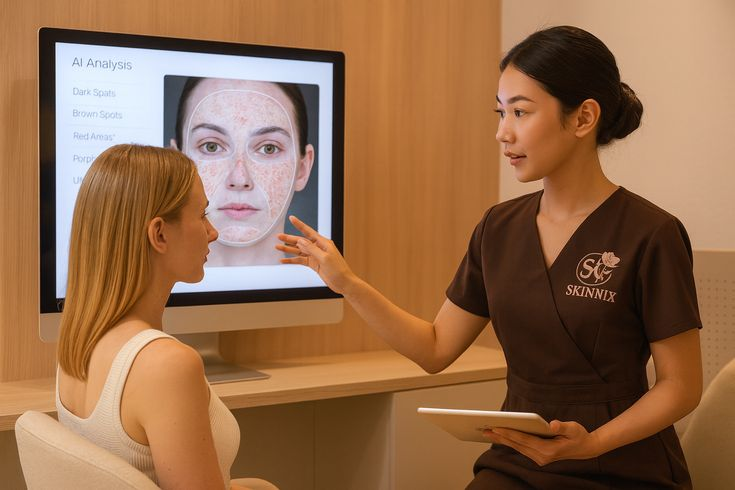
Instead of asking consumers to identify their own skin concerns, AI-powered skincare analysis tools use computer vision and machine learning to evaluate visible characteristics of the skin through a smartphone camera. Within seconds, they can generate reports on hydration, texture, pore visibility, pigmentation, redness, and signs of aging—along with personalized skincare recommendations.
For many users, this feels like having a skincare consultant in their pocket.
But how reliable are these tools? Can they really understand your skin? And perhaps more importantly, how should you use AI without becoming overly dependent on it?
Let’s take a closer look at the technology that’s quietly transforming the beauty industry.
Why AI Is Changing the Way We Think About Skincare
For decades, skincare shopping followed a familiar pattern. You walked into a store, described your skin concerns to a beauty advisor, or bought products recommended by influencers, friends, or online reviews. Sometimes the products worked. Often they didn’t.
The biggest problem wasn’t the products themselves—it was the lack of personalization.
Two people with acne may have completely different underlying causes. One might have oily skin, while another has a damaged skin barrier from overusing exfoliating acids. Similarly, redness can result from temporary irritation, dehydration, or a chronic skin condition. Without understanding these differences, choosing skincare becomes a process of trial and error.
Artificial intelligence aims to reduce that uncertainty.
Rather than making assumptions based on broad skin types, AI evaluates visible patterns unique to your face. It doesn’t simply categorize you as having “dry skin.” Instead, it may detect that your cheeks appear dehydrated while your forehead produces excess oil, or that pigmentation is concentrated around your temples rather than evenly distributed.
This level of analysis encourages a more targeted approach to skincare. Instead of buying products because they’re trending on social media, users are encouraged to focus on what their own skin appears to need.
That shift—from trend-driven beauty to data-informed skincare—is one of AI’s most significant contributions.
How AI Actually Analyzes Your Face
At first glance, AI skin analysis might seem almost magical. You upload a selfie, wait a few seconds, and receive a detailed skin report. Behind that simple experience, however, is a sophisticated combination of technologies working together.
The first step is computer vision, which allows the software to detect and map your facial features. Rather than treating your face as a single image, the system identifies specific regions such as the forehead, cheeks, nose, chin, and under-eye area. Each section is analyzed independently because different skin concerns often appear in different places.
Once your face has been mapped, machine learning algorithms compare what they see against enormous datasets containing thousands—or in some cases millions—of facial images. These datasets help the system recognize visual patterns associated with common skin concerns.
For example, a cluster of small shadows may indicate enlarged pores. Fine horizontal lines across the forehead may suggest early signs of skin aging. Uneven patches of color could point to pigmentation or sun damage.
It’s important to understand that AI isn’t “seeing” your skin the way a dermatologist does. It isn’t diagnosing diseases or examining skin cells. Instead, it’s recognizing statistical patterns based on visual information. In many ways, it’s similar to facial recognition technology—except instead of identifying a person, it’s identifying visible characteristics of the skin.
This distinction matters because it highlights both the strengths and limitations of AI. It excels at consistency and pattern recognition but cannot interpret everything happening beneath the skin’s surface.
What AI Gets Right—and Why That’s Valuable
One of the most impressive aspects of AI skincare isn’t that it recommends products. It’s that it helps people become more observant about their own skin.
Most of us notice changes only when they’re obvious—a breakout before an important event or a patch of dryness during winter. Subtle changes, however, often go unnoticed. Gradual increases in pigmentation, slightly enlarged pores, or the early appearance of fine lines can develop over months without attracting much attention.
AI is remarkably good at highlighting these gradual changes.
Many skincare apps allow users to compare photographs taken weeks or months apart. Looking at two images side by side often reveals improvements—or setbacks—that would otherwise be difficult to recognize. This makes AI particularly useful for evaluating whether a skincare routine is actually delivering results.
It also encourages consistency.
People frequently switch products after only a week or two because they assume nothing is happening. By tracking visible changes over longer periods, AI reinforces an important truth about skincare: meaningful improvements usually take time.
Perhaps its greatest benefit, however, is helping users simplify their routines.
The modern skincare market offers thousands of products promising brighter skin, smaller pores, fewer wrinkles, and instant hydration. Faced with so many choices, it’s easy to believe that more products automatically lead to better results.
In reality, many people damage their skin by layering too many active ingredients without understanding what their skin actually needs.
AI encourages the opposite approach. By identifying a few key concerns instead of every possible imperfection, it helps users prioritize rather than overload their routine.
Sometimes the smartest skincare decision isn’t buying another serum—it’s realizing you don’t need one.
Where AI Still Falls Short
Despite its impressive capabilities, AI is far from perfect.
One of the biggest misconceptions surrounding AI skincare is that it can “diagnose” your skin. It can’t.
A smartphone camera captures only what is visible on the surface. It cannot determine whether acne is caused by hormones, whether redness is linked to rosacea, or whether irritation stems from an allergic reaction. It also can’t assess your skin barrier, hydration levels beneath the surface, or underlying medical conditions.
External factors can also influence the results. Poor lighting may exaggerate pigmentation. Makeup can hide blemishes or create the illusion of smoother skin. Even the angle of your face or the quality of your phone’s camera can change the analysis.
This explains why two different AI skincare apps sometimes produce different reports using the same photo. Each platform is trained on different datasets and uses its own algorithms to interpret visual information.
Rather than viewing AI as an authority, it’s more accurate to think of it as an intelligent assistant—one that provides useful observations but still requires human judgment.
AI vs. Dermatologists: Is Technology Replacing Human Expertise?
As AI becomes more sophisticated, it’s natural to wonder whether it could eventually replace a dermatologist. The short answer is no—and that’s actually a good thing.
Artificial intelligence excels at analyzing visible patterns quickly and consistently. It can estimate pore size, identify areas of pigmentation, monitor changes in skin texture, and compare your skin over time far more objectively than human memory can. For everyday skincare guidance, this makes AI an incredibly useful tool.
However, skincare isn’t just about what can be seen.
A dermatologist considers factors that no AI camera currently can, including your medical history, lifestyle, medications, allergies, hormonal changes, and family history of skin conditions. Two people with similar-looking acne, for example, may require completely different treatments depending on the underlying cause.
Think of AI as the first layer of insight rather than the final answer.
It can help you understand what your skin looks like today, while a dermatologist helps determine why your skin looks that way and how to treat medical concerns safely.
The most effective approach is combining both. Use AI for routine monitoring and product selection, and consult a dermatologist whenever symptoms persist, worsen, or involve pain, inflammation, or unusual skin changes.
The Privacy Question: What Happens to Your Facial Data?
Whenever you upload a photo to an AI skincare app, you’re sharing something deeply personal—your face.
Unlike passwords, facial features can’t simply be changed if they’re compromised. That’s why privacy should be part of every conversation about AI beauty technology.
Before using any AI skincare platform, it’s worth asking a few questions:
- Does the app store your photos?
- Are images encrypted?
- Can you permanently delete your data?
- Is your information used to improve future AI models?
- Does the company share data with third parties?
Reputable companies are becoming more transparent about these practices, but privacy policies vary significantly.
For users, the safest approach is simple: choose well-established platforms, review their privacy policies, and avoid granting unnecessary permissions.
Technology should help you care for your skin—not require you to sacrifice your privacy.
How to Get More Accurate AI Skin Analysis
AI is only as good as the information it receives.
If you’ve ever wondered why two scans produced different results, the answer is often surprisingly simple: the conditions changed.
To improve accuracy, consistency matters far more than perfection.
Here are a few practical tips:
Use Natural Lighting
Soft daylight provides the most balanced view of your skin. Harsh bathroom lighting or colored LED lights can exaggerate redness, shadows, or pigmentation.
Remove Makeup
Foundation, concealer, and even tinted sunscreen can interfere with the AI’s ability to detect pores, blemishes, or uneven skin tone.
Keep Your Camera Angle Consistent
Try taking your scans from the same distance and angle each time. This makes it easier to compare progress over weeks or months.
Don’t Chase Daily Changes
Your skin naturally fluctuates due to sleep, stress, hydration, and hormones. Weekly or monthly comparisons are much more meaningful than checking every day.
The goal isn’t to achieve a perfect skin score—it’s to understand long-term trends.
The Future of AI in Personalized Skincare
Today’s AI skincare tools are impressive, but they represent only the beginning.
Over the next decade, AI is expected to become even more integrated into everyday beauty routines.
Imagine waking up, standing in front of a smart mirror, and receiving a daily skin report before brushing your teeth. The mirror notices that your skin is more dehydrated than yesterday because of low humidity overnight. Instead of recommending an entirely new routine, it simply suggests using a richer moisturizer that evening.
Wearable devices may eventually monitor environmental factors such as UV exposure, humidity, and pollution, adjusting skincare recommendations throughout the day.
Some companies are already exploring AI systems capable of combining skin analysis with lifestyle information, including sleep quality, exercise habits, nutrition, and stress levels. This broader perspective could make future recommendations even more personalized.
While this vision is exciting, one thing is unlikely to change: healthy skin will still depend on consistent habits rather than technology alone.
No AI can replace wearing sunscreen, staying hydrated, getting enough sleep, or following a routine that suits your skin.
Technology can guide you—but your daily choices will always have the biggest impact.
So, Should You Use AI for Your Skincare Routine?
For most people, the answer is yes—but with realistic expectations.
AI skincare analysis isn’t a miracle solution, nor is it a substitute for professional healthcare. What it offers is something equally valuable: awareness.
It encourages you to observe your skin more carefully, track changes objectively, and make decisions based on data rather than marketing trends or impulse purchases.
If you’ve ever bought a product simply because it went viral on social media, AI can help shift your focus back to what actually matters—your own skin.
That’s perhaps its greatest strength.
Not because it tells you what to buy.
But because it teaches you to understand why you’re buying it.
Conclusion
Artificial intelligence is reshaping the skincare industry by making personalized skin analysis accessible to anyone with a smartphone. Through advances in computer vision and machine learning, AI can identify visible skin concerns, monitor progress over time, and provide tailored skincare recommendations that were once available only through professional consultations.
Yet, the real value of AI isn’t that it has all the answers. It’s that it encourages a more thoughtful approach to skincare.
Instead of chasing every new product launch or following trends blindly, AI invites users to slow down, observe their skin, and build routines based on actual needs rather than assumptions.
Like any technology, AI works best when used wisely. It should complement—not replace—the expertise of dermatologists, scientific research, and your own understanding of how your skin responds to different products and environments.
As AI continues to evolve, one thing remains unchanged: healthy skin comes from consistency, patience, and informed choices. Technology can make that journey smarter, but the most important investment will always be the time and care you give to your skin every day.